There are two storms currently in the Pacific basin, and two areas of interest for future development. None of these four systems are expected to impact land in the imminent future, although if Gil sticks together, it could make things rainy and windy in Hawai’i. The Atlantic remains quiet for now, but some omens of a more active time may be appearing.
TROPICAL STORM IONA
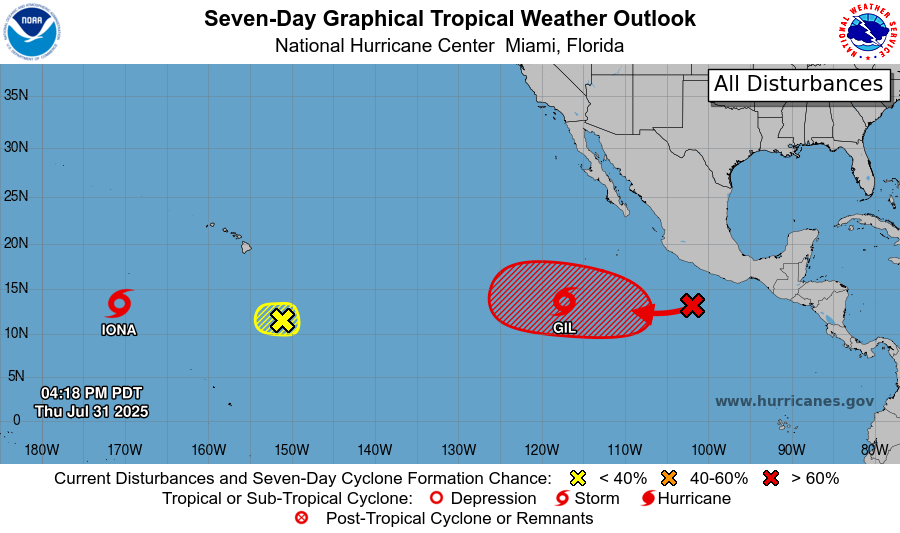
Iona is currently located well to the southwest of Hawai’i, with maximum sustained winds of 50 mph, a central pressure of 1002 mb, and is moving west northwest at 12 mph. As it makes a turn to the northwest, it will enter an area of cooler water, and higher wind shear. The environment it’s moving towards isn’t particularly moist. As a result, I doubt this storm strengthens. It will likely remain a tropical storm for the rest of the week, until it moves into even cooler waters and dissipates altogether early next week.
TROPICAL STORM GIL
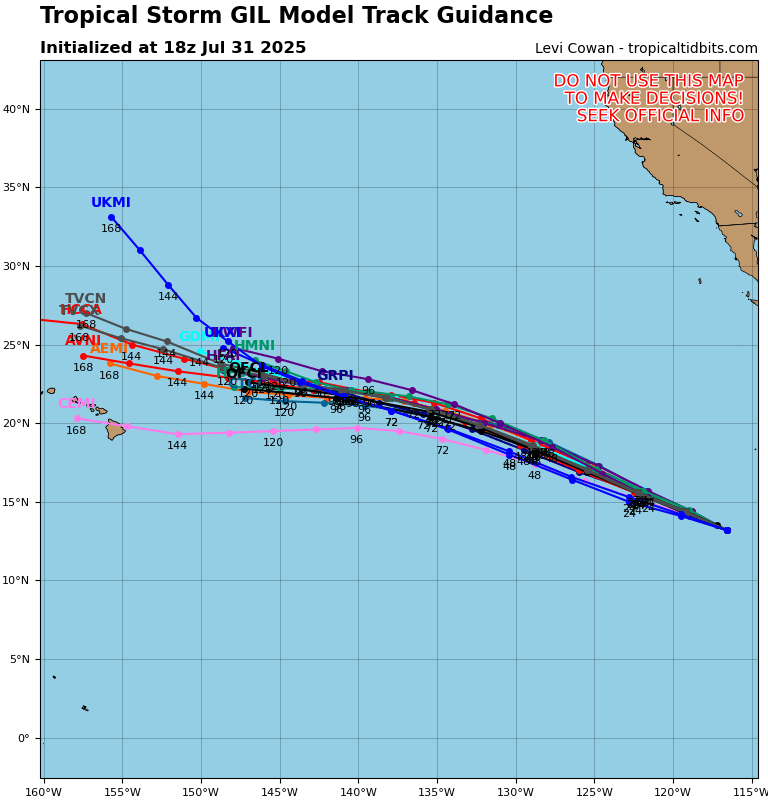
Gil is currently located well to the southwest of Cabo San Lucas, with maximum sustained winds of 50 mph, a central pressure of 1000 mb on the dot, moving west northwest at 13 mph. The environment for this storm is slightly better, with warmer ocean water, but it is still far from ideal. Some models do have this storm strengthening into a hurricane, between later today and early on Sunday, before entering a wall of wind shear and cooler water which will weaken the storm. It is moving away from Mexican shores, but in the direction of Hawai’i. It would be, at worst, a tropical storm when it gets near Hawaii, making its closest approach during middle to late next week. Aside from the areas right near the beach that might be affected by a few big waves, rain and gusty wind would be the only threats to the island chain.
OTHER AREAS TO WATCH
Invest 92C is running out of time to develop, the NHC is only giving it a 20% chance. The storm is still disorganized. Because it is following in the footsteps of Iona and former Tropical Storm Kelly, the environment it will find will be less favorable, as the other storms took advantage of the conducive environment. If anything is going to form in this area, it will occur sometime today, because any later than that and it will be too late.
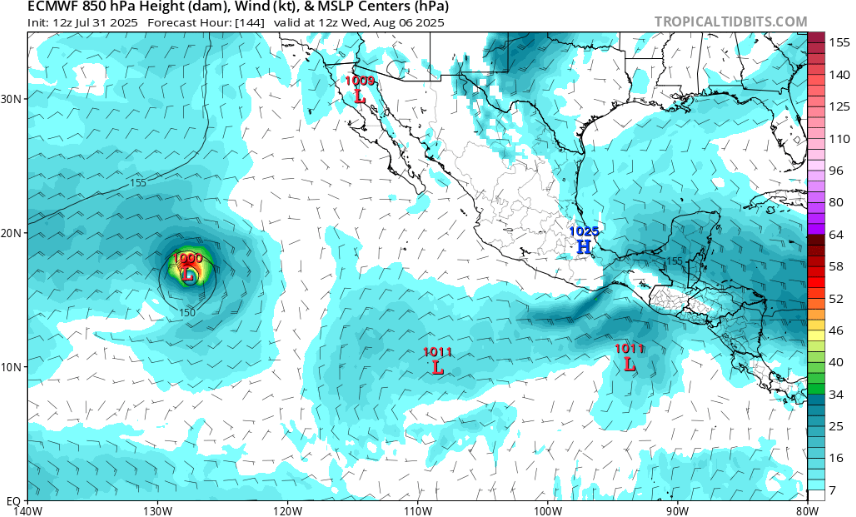
An area of interest closer to Mexico is much more likely to develop, but it will take longer. Shear is expected to abate in the area after Tropical Storm Gil dissipates, allowing another storm to form in the same area next week. Like Gil, any storm that forms here will likely travel harmlessly to the west, keeping the storm center far away from any land.
7-14 DAY OUTLOOK
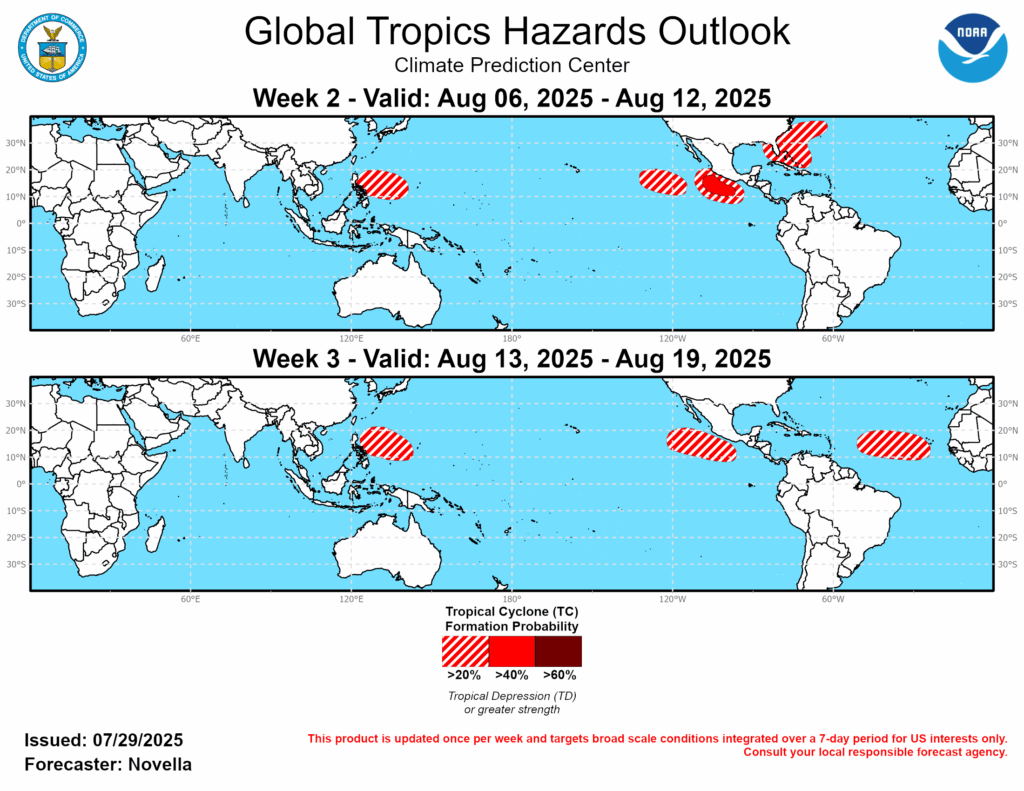
All signs point to yet another storm forming in the East Pacific, south or southwest of Mexico, next week. The Pacific hurricane factory may be back up and running.
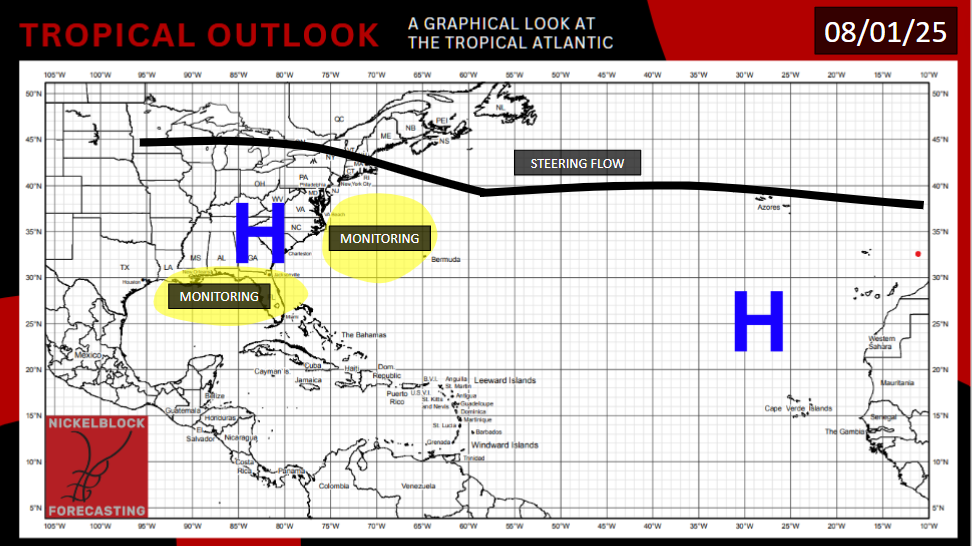
Moving to the Atlantic, there is some model support for a “blink and you’ll miss it” type storm off the East Coast of the United States. Anything that forms will likely ride a system out into the Atlantic, not impacting land, save for a rain band or two in the coastal area of where it initially forms.
There is concern for the area shaded in the map above surrounding Florida. There is potential for an area of low pressure to form that could then get tropical characteristics if it’s over the ocean. Waters are plenty warm enough, so if there’s a break in the wind shear and enough moisture is present aloft, we could see a storm form here. A lot has to go right, so I wouldn’t peg a storm here as a particularly likely scenario at this point.