Meteorologists use ensemble forecasts for a few very important reasons:
— We don’t know what the atmosphere actually looks like right now
— If we don’t know where we start, we can’t know where we end
— Ensembles are the best way to bridge the gap between not knowing and making an estimate
Small changes in temperature, wind, or moisture, on the ground or anywhere up in the air, can lead to very different outcomes, especially several days in advance.
USING ENSEMBLES
Most meteorologists rely on ensemble-driven forecast when looking out beyond two or three days because it offers a more accurate depiction of the true potential outcomes
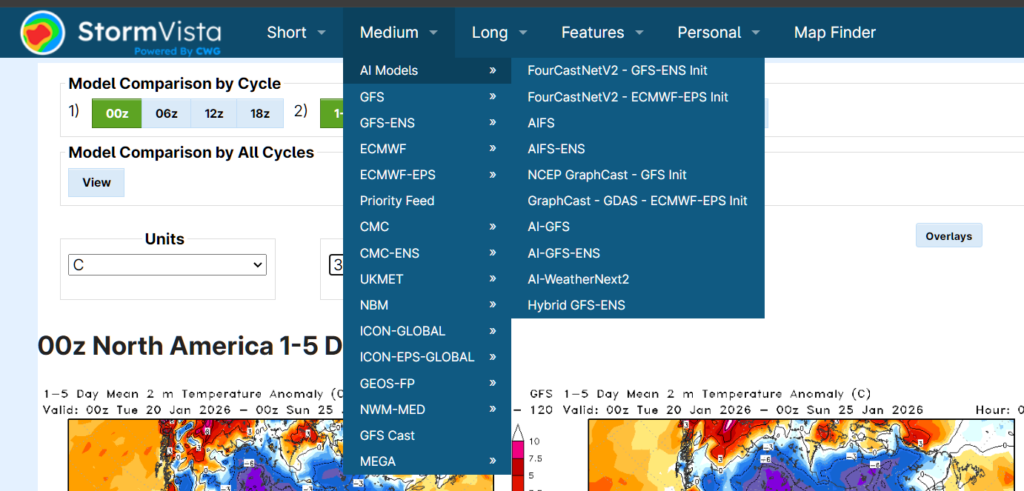
Today, there are nearly a dozen ensemble modeling systems in use. Some are traditional numerical and physics-based models that solve equations describing how the atmosphere moves and changes. Others are statistical or AI / machine-learning models, which learn patterns from large amounts of past weather data. Each approach has strengths and weaknesses, so no single model can tell the whole story.
Each ensemble model produces many different forecast “members.” These members represent different possible versions of the future.
When we cluster these members together, we group forecasts that look similar. This helps us see whether multiple, independent models are arriving at the same general outcome.
For example, if several different ensemble systems, including both physics-based and AI-driven models, all show a similar storm track or temperature pattern, that agreement raises a forecaster’s confidence that the outcome is more likely.
On the other hand, if the models split into very different clusters, it tells us the forecast is more uncertain.
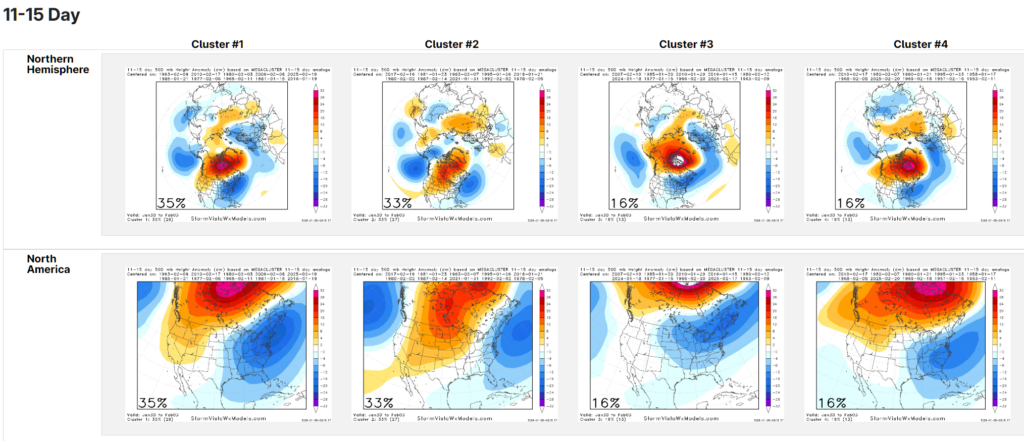
This approach is especially useful during high-impact weather, such as winter storms, severe weather outbreaks, or extreme heat and cold. In these situations, individual model runs can look noisy or even contradictory. Ensembles and clustering help meteorologists cut through that noise, identify the most common patterns, and focus on the scenarios that matter most for decision-making.
Rather than relying on a single forecast model, ensembles and clusters allow forecasters to understand the range of possibilities, the most likely outcomes, and where the biggest risks are.
A TEMPERATURE EXAMPLE
When the temperature changes very quickly over a short distance, it becomes very hard to say exactly what kind of precipitation will fall. That’s because temperature plays a big role in deciding whether we get rain, snow, or ice.
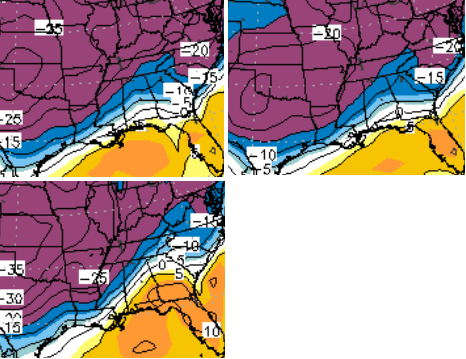
To help with this, meteorologists use many weather models instead of just one. The maps above are made using about 200 different model runs.
Each model run shows a possible way the weather could turn out. The individual members are grouped up by how much they look alike and are put into “teams.”
Once the similar runs are grouped together, we make maps for each group.
Not all groups are the same size, though.
— The top left map shows the largest group, with 42% of the models.
— The top right map shows 39% of the models.
— The bottom left map shows the smallest group, with 19% of the models.
Bigger groups mean more models agree, while smaller groups mean less agreement. So we tend to give more weight to the group that features more members in its “team.”
DIFFICULTIES
When we use ensembles, we trade some detail for bigger-picture understanding. If you have 200 model forecasts, you also have 200 different answers. But in real life, only one temperature will actually happen.
So while ensembles help us see the range of possibilities, they can sometimes make it harder to point to one exact number.
For example, imagine the real high temperature ends up being 49F. If the ensemble shows temperatures anywhere from 37F to 54F, that range is technically correct… but it doesn’t feel very helpful if you just want to know the correct number.
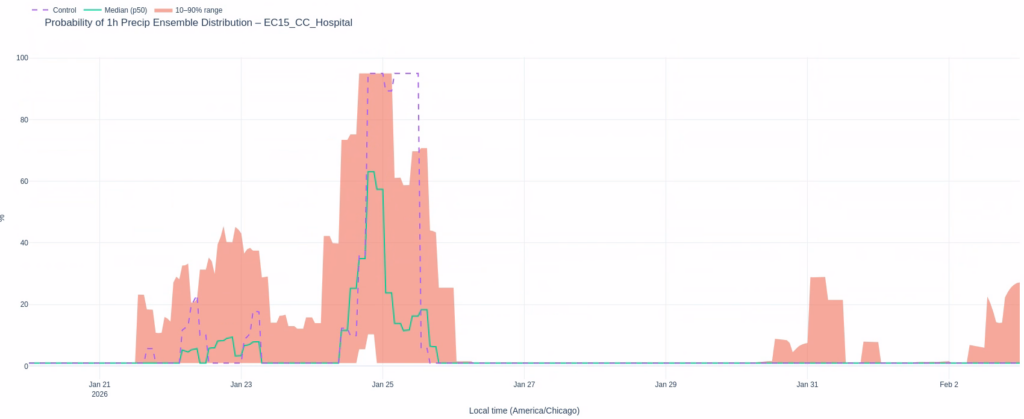
Along the same lines, ensembles can make forecasts feel a little blurry. Important details, like exact timing or exact locations, can get smoothed out when many forecasts are combined. A storm might show up clearly in the ensemble, but the “team members” may disagree on when it arrives or which town gets the worst of it.
This is why ensembles are used more for looking days ahead, rather than for something like today’s high temperature. When we get closer in time, forecasters rely more on observations and high-resolution models that focus on details instead of possibilities.
In short, ensembles are great for answering the question: “What could happen?”
But they are less helpful for answering: “What will happen… right here, at this specific time?”
PRECISION VS ACCURACY
One last important idea that comes up when we start to talk about ensembles and clustering is the difference between precision and accuracy.
Accuracy means being close to the real answer. Precision means being very specific.
In weather forecasting, those two things are not always the same. And often you can do one OR the other, but not both.
For example, if the actual high temperature is 50F:
A forecast from three days earlier of 48F is accurate, even if it isn’t perfect.
A forecast from three days earlier of 53.7F is very precise, but was less accurate.
Weather forecasts often have to choose between being very specific or being more broadly correct when looking out into the future. The farther out in time we look, the harder it is to be both.Ensembles push this further since we are averaging together a ton of different “team members” too.
Ensembles, though, usually focus more on accuracy than precision. They may not give one exact number, but they do a good job showing the range of what is likely. That helps meteorologists understand the risk and avoid being confidently wrong.
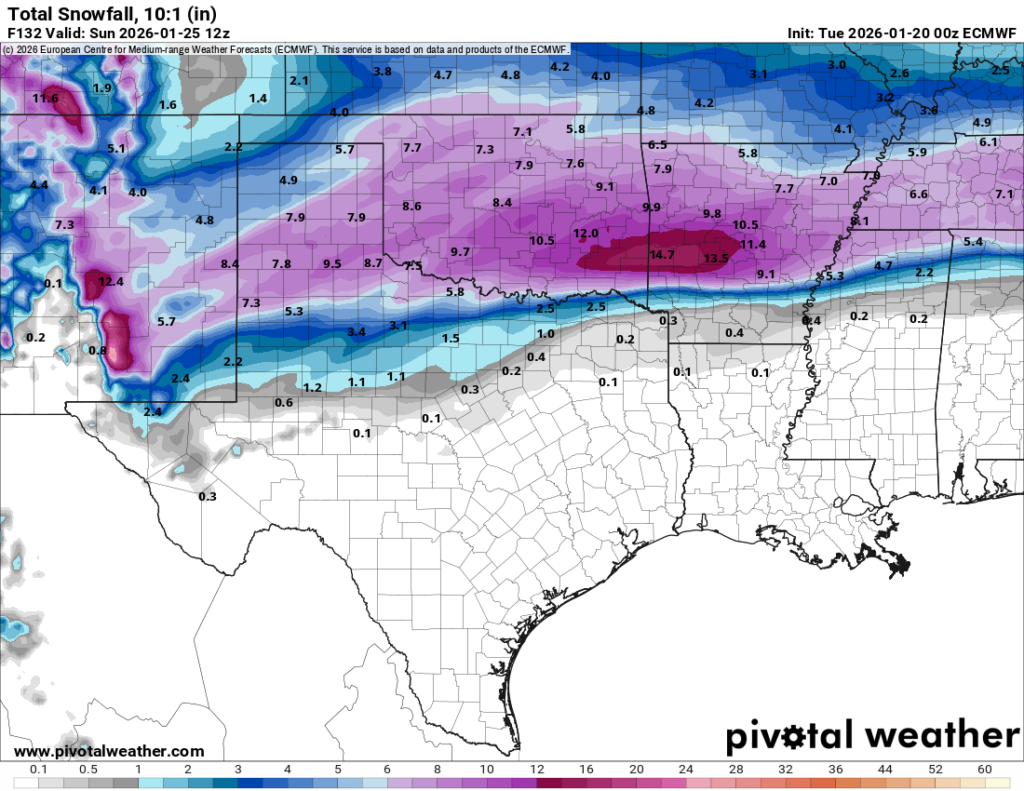
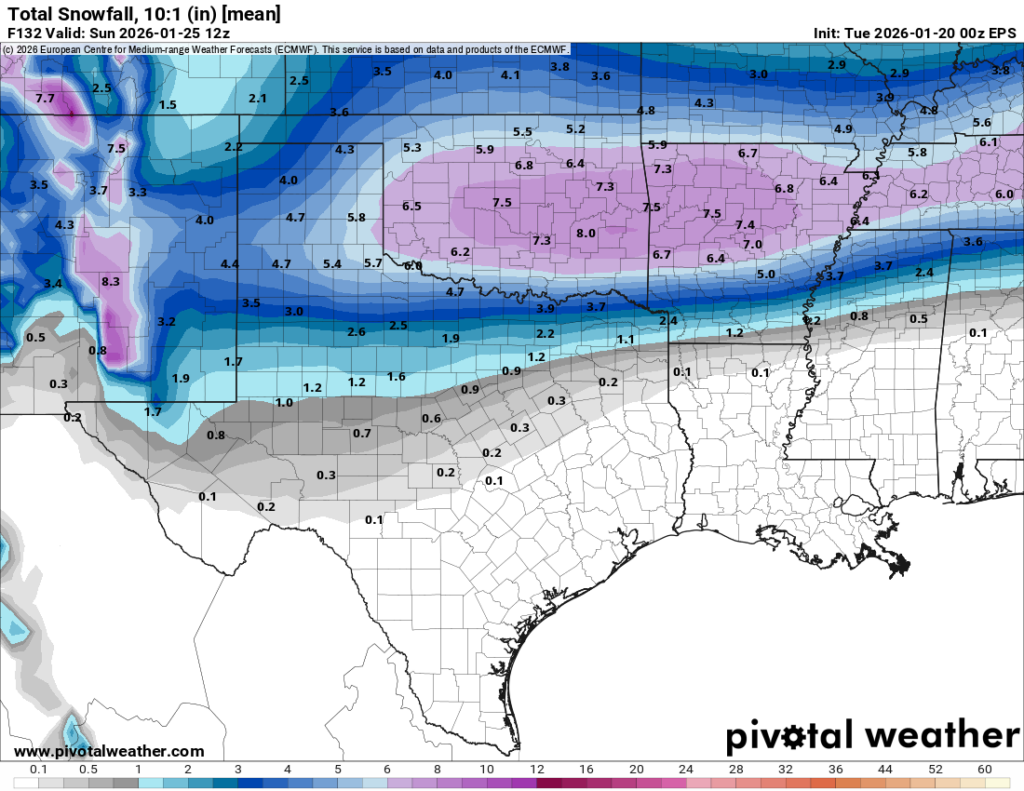
As we get closer to the event, forecasters can become more precise, because we have better data and fewer unknowns. But even then, too much precision can be misleading if it suggests certainty that doesn’t really exist.
That’s why actual meteorologists spend time explaining the difference between precision and accuracy.
A forecast that sounds very specific isn’t always the best forecast… and sometimes a less precise forecast is actually more honest and more useful.


