Looking at the latest from Space Weather…
The Sun
Here is a live look at the Sun. A reminder that sunspots are dark
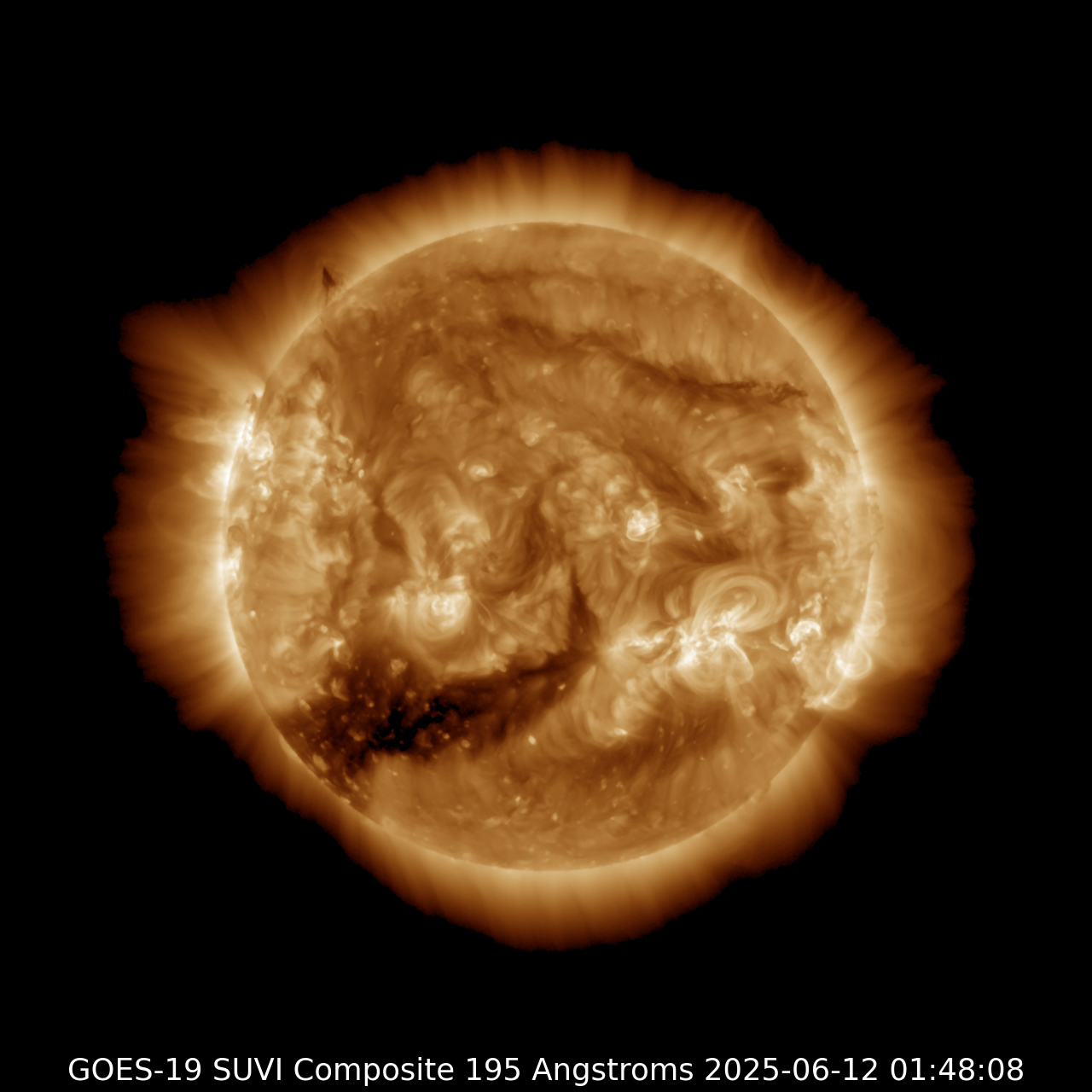
A reminder that the Sun is a very, very active place with Sunspots, Plage, Faculae, Coronal Holes, and Filaments and Prominences.
Sunspots
What they are: Cooler, darker regions caused by concentrated magnetic fields that suppress convection (the boiling motion that normally carries heat upward).
What they look like:
— Dark cores (“umbrae”) surrounded by lighter halos (“penumbrae”).
— They appear small in images, but many are larger than Earth.
Why they matter: Sunspots are often the sites of solar flares and coronal mass ejections (CMEs). More sunspots generally mean a more active Sun.
Plage
What it is: Bright, patchy regions in the Sun’s chromosphere associated with enhanced magnetic activity.
Where seen: Best visible in H-alpha or Ca II K-line images rather than the wavelength you provided, but they often sit around active regions where sunspots form.
Why they matter: Plage warms the chromosphere and is a sign that magnetic fields are intensifying.
Faculae
What they are: Bright streaks or patches that appear near the Sun’s limb (edge). They’re caused by magnetic fields pushing hot gas sideways so you can see deeper, hotter layers.
Where seen:
— Most obvious near the edge of the disk
— Usually accompany sunspot groups
— Contribute to the Sun being brighter during times of high sunspot activity
Coronal Holes
You actually have one visible in this image — the darker patch near the center.
What they are: Open magnetic-field regions where solar plasma escapes more easily.
Why they matter: They are sources of high-speed solar wind streams that can trigger geomagnetic storms at Earth.
Filaments & Prominences
Perhaps not obvious in this image, but important features:
Filaments: dark, thread-like magnetic structures hovering above the surface.
Prominences: the same structures seen on the edge of the Sun but glowing brightly.
Both are huge loops of magnetic plasma that can erupt if destabilized.
AURORAS
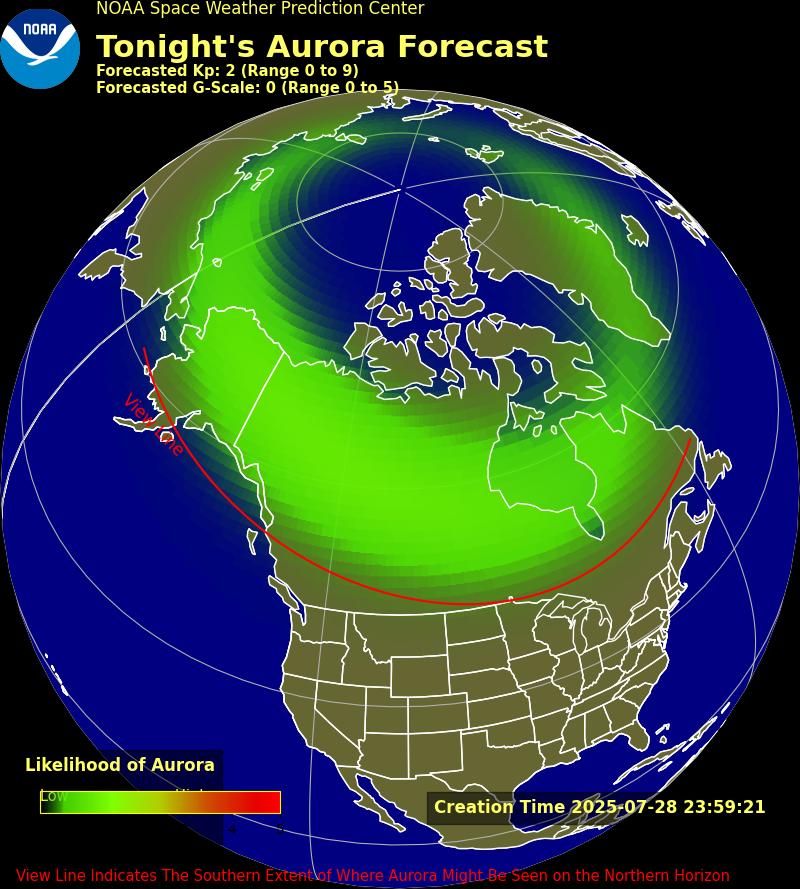
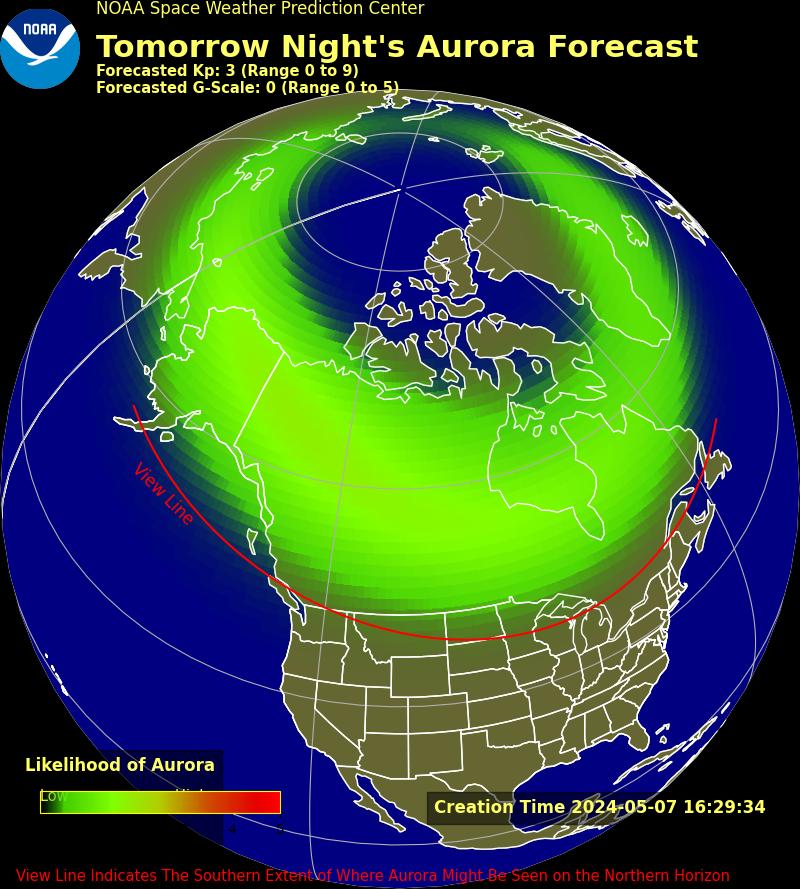
A look at the current state of the aurora and any CMEs
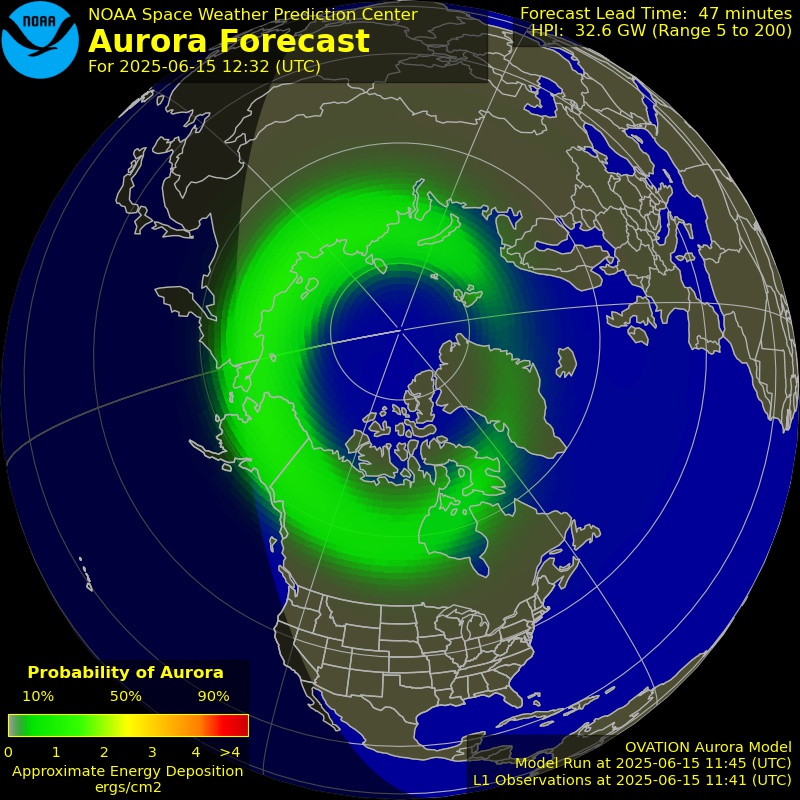
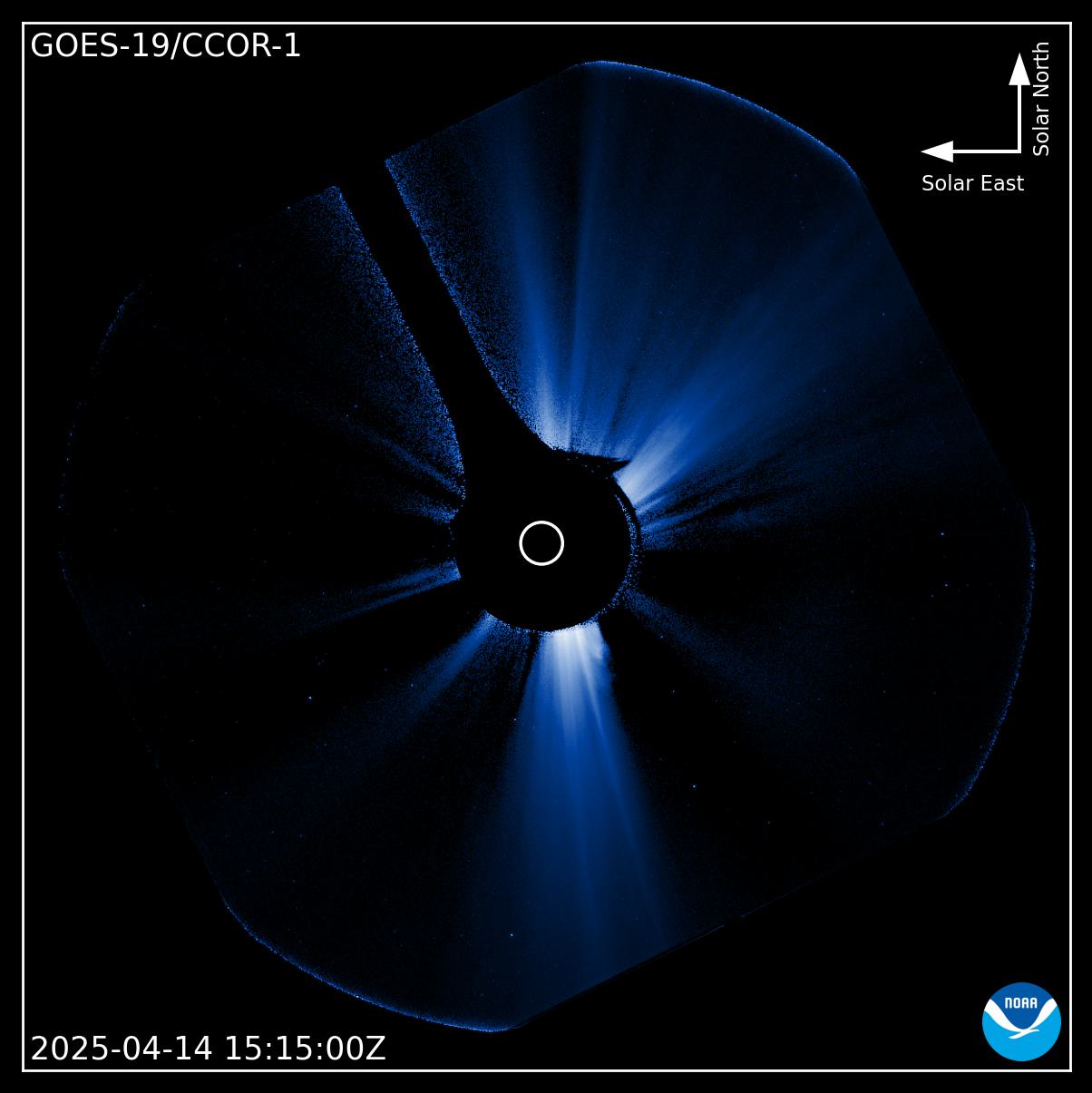
Here is a look at the Aurora forecast for tonight and tomorrow from the Space Weather Center.
LATEST POSTS ABOUT SPACE
- The Evolution of Weather Forecasting: Why We Still Get It Wrong
 If you have ever complained that the weather forecast is wrong, you are not alone. People depend on accurate forecasts every day to decide what to wear, what to do, and how the…
Read more of The Evolution of Weather Forecasting: Why We Still Get It Wrong
- Coronal Mass Ejection headed toward Earth because why not, right?
 Ah, the Sun! The giant nuclear reactor in the sky that gives us light and heat. And… charged particles! A Coronal Mass Ejection is headed toward earth and will collide with out magnetic…
Read more of Coronal Mass Ejection headed toward Earth because why not, right?
- Ask NASA: What’s the weather on Mars?
 It turns out that NASA uses the Rovers and Satellites to monitor Martian weather. And, as you can imagine, it is pretty cool. In fact, NASA has also set up a Mars Rover…
Geomagnetic Storms
| Scale | Description | Effect | Physical measure | Average Frequency (1 cycle = 11 years) |
|---|---|---|---|---|
| G 5 | Extreme | Power systems: Widespread voltage control problems and protective system problems can occur, some grid systems may experience complete collapse or blackouts. Transformers may experience damage. Spacecraft operations: May experience extensive surface charging, problems with orientation, uplink/downlink and tracking satellites. Other systems: Pipeline currents can reach hundreds of amps, HF (high frequency) radio propagation may be impossible in many areas for one to two days, satellite navigation may be degraded for days, low-frequency radio navigation can be out for hours, and aurora has been seen as low as Florida and southern Texas (typically 40° geomagnetic lat.). |
Kp = 9 | 4 per cycle (4 days per cycle) |
| G 4 | Severe | Power systems: Possible widespread voltage control problems and some protective systems will mistakenly trip out key assets from the grid. Spacecraft operations: May experience surface charging and tracking problems, corrections may be needed for orientation problems. Other systems: Induced pipeline currents affect preventive measures, HF radio propagation sporadic, satellite navigation degraded for hours, low-frequency radio navigation disrupted, and aurora has been seen as low as Alabama and northern California (typically 45° geomagnetic lat.). |
Kp = 8, including a 9- | 100 per cycle (60 days per cycle) |
| G 3 | Strong | Power systems: Voltage corrections may be required, false alarms triggered on some protection devices. Spacecraft operations: Surface charging may occur on satellite components, drag may increase on low-Earth-orbit satellites, and corrections may be needed for orientation problems. Other systems: Intermittent satellite navigation and low-frequency radio navigation problems may occur, HF radio may be intermittent, and aurora has been seen as low as Illinois and Oregon (typically 50° geomagnetic lat.). |
Kp = 7 | 200 per cycle (130 days per cycle) |
| G 2 | Moderate | Power systems: High-latitude power systems may experience voltage alarms, long-duration storms may cause transformer damage. Spacecraft operations: Corrective actions to orientation may be required by ground control; possible changes in drag affect orbit predictions. Other systems: HF radio propagation can fade at higher latitudes, and aurora has been seen as low as New York and Idaho (typically 55° geomagnetic lat.). |
Kp = 6 | 600 per cycle (360 days per cycle) |
| G 1 | Minor | Power systems: Weak power grid fluctuations can occur. Spacecraft operations: Minor impact on satellite operations possible. Other systems: Migratory animals are affected at this and higher levels; aurora is commonly visible at high latitudes (northern Michigan and Maine). |
Kp = 5 | 1700 per cycle (900 days per cycle) |

