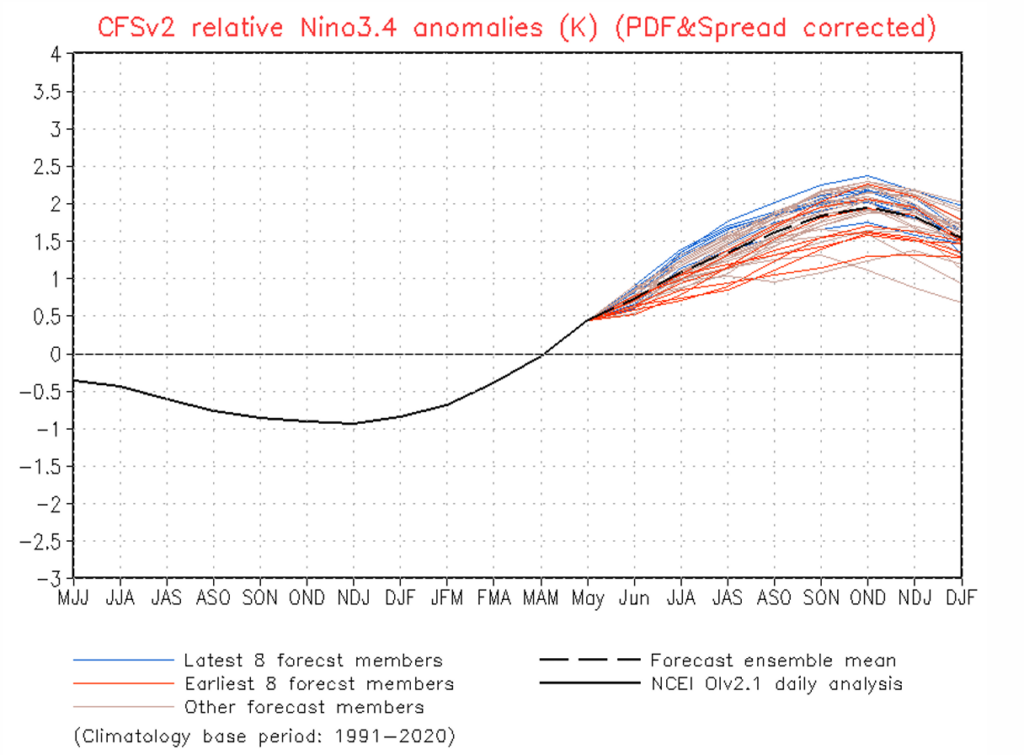
The 2026 Atlantic hurricane season starts in just a few days, and NOAA’s 2026 Hurricane Season Outlook gives a 55% chance of a below-normal Atlantic hurricane season, with 8–14 named storms, 3–6 hurricanes, with 1–3 of those becoming major hurricanes. Meanwhile, ENSO-neutral conditions remain in place, though the Climate Prediction Center says El Niño is likely to develop sometime between May and July. The ClCFS.v2 ensemble mean shown below (black dashed line) supports this, showing a transition from La Niña into a potentially strong El Niño that persists through the Northern Hemisphere winter of 2026–27.
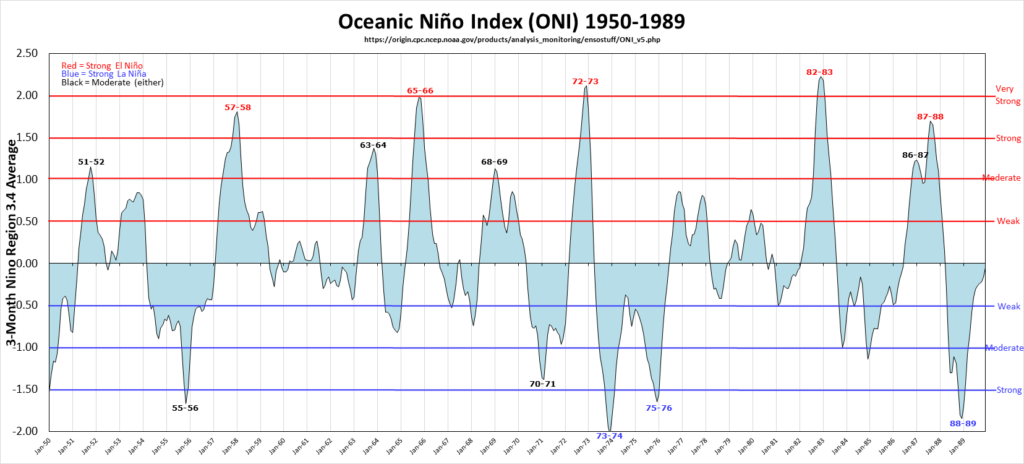
El Niño tends to reduce hurricane activity across the Atlantic, but don’t let your guard down! It only takes one storm to leave a lasting mark for decades, much like Hurricane Betsy, which slammed into New Orleans on the evening of September 9, 1965. Interestingly enough, Hurricane Betsy also occurred during a strong El Niño year, serving as a powerful reminder that even in a below-normal hurricane season, dangerous and destructive hurricanes can still occur.
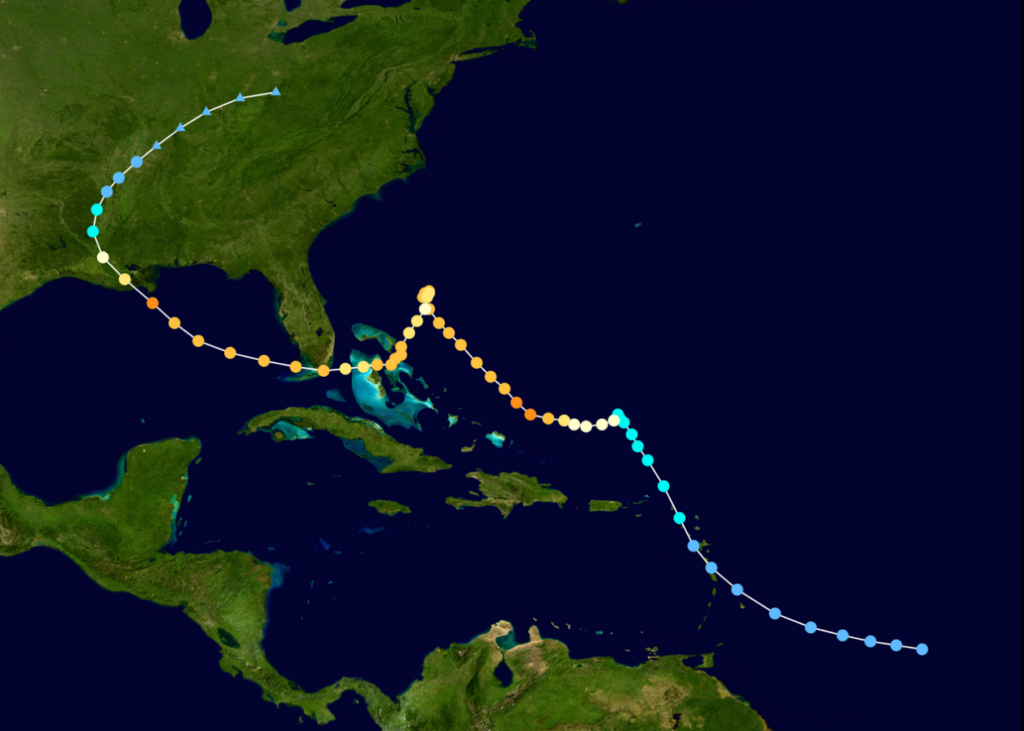
Betsy’s track shown below was far from straight. This is because there was a strong ridge of high pressure in place off the East Coast blocking its northward movement and forcing Betsy to do a loopty loop toward South Florida. After crossing the Florida Keys as a Category 3 hurricane, Betsy quickly intensified over the Gulf of Mexico due to an upper-level trough helping to strengthen the storm. Betsy ultimately made landfall near Grand Isle, Louisiana, as a fast-moving Category 4 hurricane with maximum sustained winds of 130 mph.
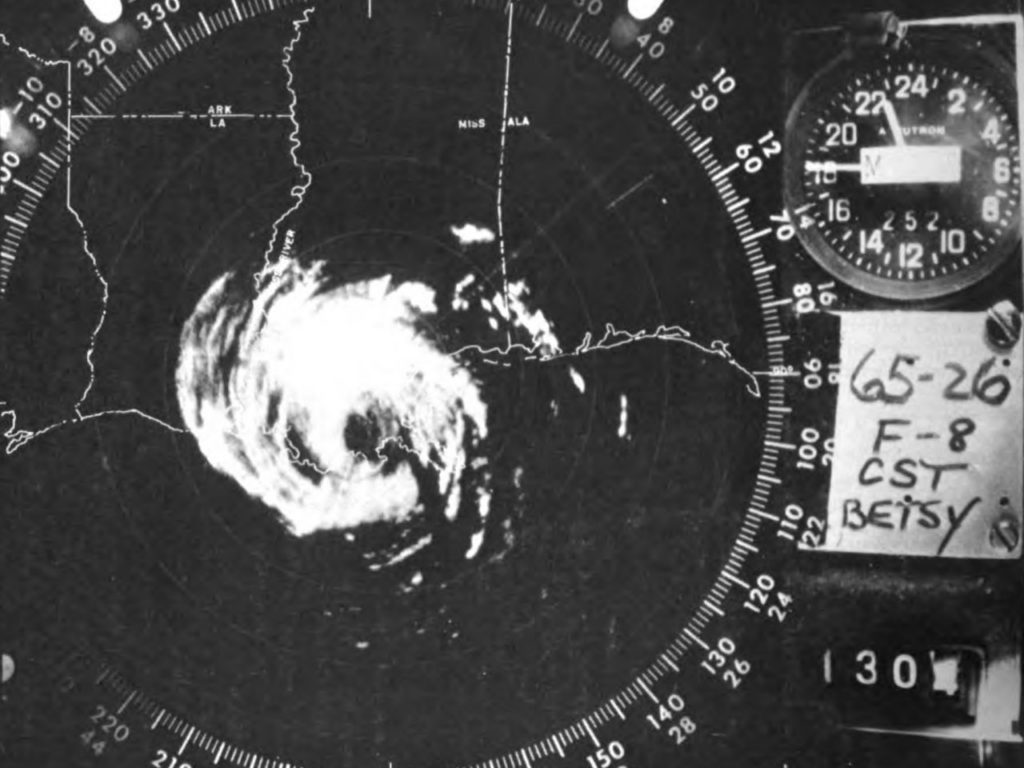
Radar image of landfall is shown below, taken by the New Orleans U.S. Weather Bureau office at 10:46 PM on September 9.
Billion Dollar Betsy earned its nickname as it was the first hurricane in the history of the United States to result in at least $1 billion in damages. Betsy remained a hurricane all the way through Baton Rouge, with the northern and western eyewalls covering Southeast Louisiana and the New Orleans area from about 8 PM until 4 AM the next morning. Storm surge up to 15 feet drove into Lake Pontchartrain, overwhelming the levees and flooding homes in the Lower Ninth Ward as shown below.
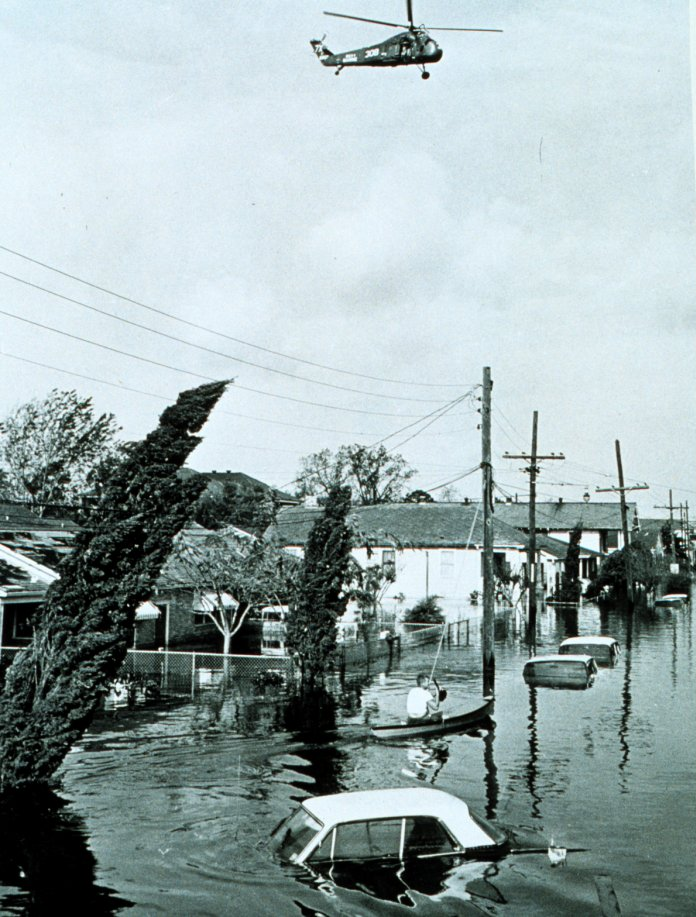
It took more than ten days for the floodwaters in New Orleans to recede, leaving people to return home and rebuild in sweltering heat without any electricity or AC…yikes!
Sources
National Weather Service Weather History Archive. Hurricane Betsy. \https://www.weather.gov/lch/1965Betsy
ggweather.com. El Niño and La Niña Years and Intensities. El Niño and La Niña Years and Intensities


