A bit like the Local Forecast, the US Forecast has specific sections that are ‘must hits’ when putting together a forecast. This is all about giving people a better understanding about the hows and whys when it comes to the entire country. It is important to cover the trends in the weather and the potential abrupt changes that may be coming, too.
Titling these posts are a bit different than the local forecasts. These will be titled: [DATE] – US Weather Forecast: [BRIEF FORECAST DESCRITOR]
An example might be, “5/27/23 – US Weather Forecast: Hot and dry out west, still cool east, with a change coming late”
STRUCTURING A FORECAST
Building a US forecast has the same 5 + 1 parts. Five parts for the discussion and one part for the brief conclusion. Here is how it breaks down:
Introduction: The first paragraph or two sets the tone for the forecast by providing an overview of the weather conditions across the United States. It mentions any significant changes compared to the previous day and highlights the regions where weather events are expected.
- Example: “Ridging out west continues to be the name of the game while troughing across the Great Lakes is helping to keep that region cooler. No major changes during the last 24 hours, but enough wiggling to make things interesting.”
Description of Weather Patterns with Regional Highlights: The next set of paragraphs discuss the prevailing weather patterns across the country in more depth. It may mention the presence of high or low-pressure systems, frontal boundaries, or other atmospheric conditions that are influencing the weather.
- Example: “The ridging out west has led to record heat across western Canada and parts of the Pacific Northwest. It has also led to very dry conditions across parts of the continent. Underneath that ridging an area of low pressure is going to sneak onshore across parts of California and that may set the stage for severe weather as we head through the next 5 to 7 days across the Plains.
The troughing across the Great Lakes has been rather stubborn and isn’t allowing Summer to take over quite yet for parts of the region, while the back side of the troughing – with a consistent dry northerly flow – things have dried out so much that flash droughts are starting to become a concern if the pattern doesn’t shift.
But it will shift. It just may take a while. Looking at the latest data, we may be sitting in this pattern for the next 7-10 days. That means no major changes between now and then. But once we do shake things loose, we should be able to flip this whole thing on its head.
That means ridging replaces troughing and troughing replaces ridging.”
Severe Weather Outlook: The third area focuses on the potential for severe weather across the United States. It highlights areas where thunderstorms, heavy rainfall, hail, damaging winds, or tornadoes are expected.
- Example: “Before we get to the pattern flip, we will continue to see the potential for storms across parts of the Southern Plains. That said, given the general setup, this isn’t the classic look for the potential for severe weather. Mother Nature doesn’t seem to care, though.
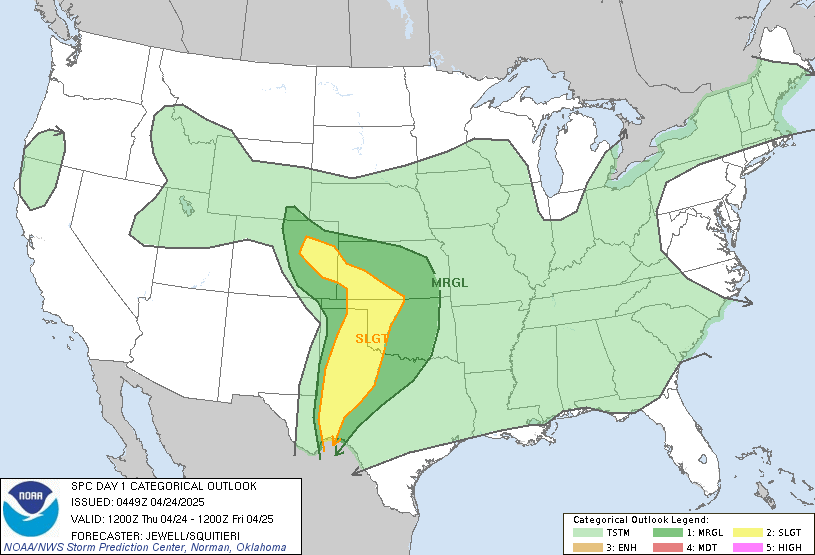
The Storm Prediction Center has highlighted parts of the country with the potential for severe weather today, tomorrow, and the day after tomorrow. As well as highlighting an area in Day 4. Most of the risks for severe weather will be across Texas, into the Tennessee Valley and then along the Gulf Coast and into the Southeast.”
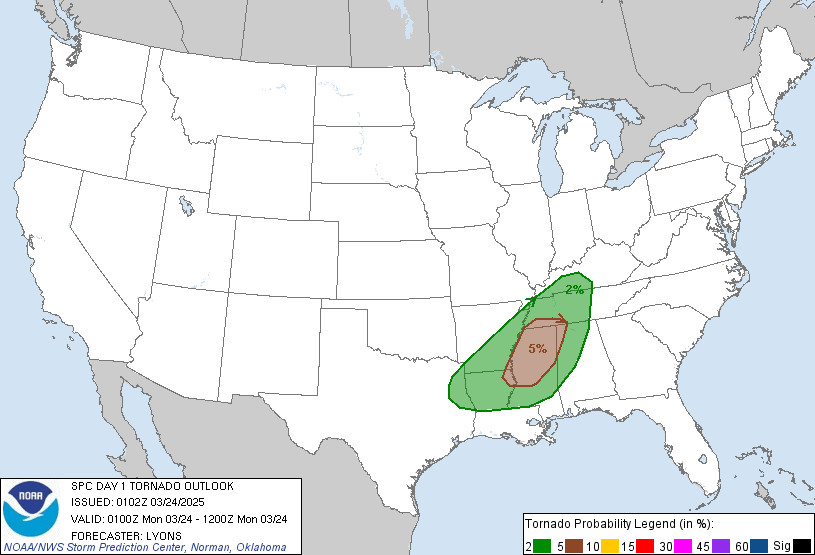
Tornadoes aren’t the main concern as we head through the next few days, but there is a 5% risk area today for parts of Texas. Instead, the main concern through the next few days is the risk for storms with heavy rain, lightning, wind gusts in excess of 60mph, and hail bigger than quarters and half-dollars. While not every thunderstorm will be producing technical severe weather, each storm will have – at least – brief heavy rain, lightning, and gusty wind. So when you hear thunder, it is time to head inside. No sense being outside when these storms blow through.”
Travel Impact: The fifth paragraph addresses any weather conditions that may impact travel across the country. It could mention potential delays or disruptions at airports, major highways, or other transportation hubs due to weather-related factors.
- Example: “The storms across the south will impact places like Dallas, Houston, New Orleans, Nashville, and Atlanta. So if you are planning a trip or flying through any of those hubs, be prepared for potential delays.
High winds across parts of the central and southern Rockies may make it tough to drive with trailers or high-profile vehicles. If you are driving down I-40 or I-80, keep this in mind.
Elsewhere, no weather-related travel concerns are in the cards.”
Extended Outlook: The next section gives a glimpse of the weather trends expected farther out in the future, usually this is where you discuss what happens beyond the current pattern and into the next weather pattern.
- Example: “An eventual pattern flip is in the cards, though, which means that we get to turn all of this around. As mentioned above, once we get past Day 10 it looks like we finally shake the troughing in the Great Lakes and the ridging out west breaks down and shoves east.
That means we should start to warm things up across the Plains and Great Lakes and up into the Northeast. And a loss of ridging out west means things should cool down a hair.
The big question is what happens to Texas. Often times when a pattern flips to troughing out west, we get a big warm up across Texas, Oklahoma and Louisiana. It also means that we open up the Gulf of Mexico for tropical weather-related interactions. So that is also worth monitoring.”
Conclusion: The final paragraph is a quick summation of the whole forecast.
- Example: “So if you like the current weather pattern, soak it up as it looks like you’ve got another week or so before things change. And if you are ready for a change, know that it may be just around the corner for you.
The switch from western ridging and eastern troughing is looking to change in about 7 to 10 days when we start to talk about eastern ridging, warmth and summerlike conditions for the eastern 2/3rds of the country and a cooldown out west.”
Putting it all together
Now that we have it all set up, let’s put it all together and see what we have…
Ridging out west continues to be the name of the game while troughing across the Great Lakes is helping to keep that region cooler. No major changes during the last 24 hours, but enough wiggling to make things interesting.
The ridging out west has led to record heat across western Canada and parts of the Pacific Northwest. It has also led to very dry conditions across parts of the continent. Underneath that ridging an area of low pressure is going to sneak onshore across parts of California and that may set the stage for severe weather as we head through the next 5 to 7 days across the Plains.
The troughing across the Great Lakes has been rather stubborn and isn’t allowing Summer to take over quite yet for parts of the region, while the back side of the troughing – with a consistent dry northerly flow – things have dried out so much that flash droughts are starting to become a concern if the pattern doesn’t shift.
But it will shift. It just may take a while. Looking at the latest data, we may be sitting in this pattern for the next 7-10 days. That means no major changes between now and then. But once we do shake things loose, we should be able to flip this whole thing on its head.
That means ridging replaces troughing and troughing replaces ridging.
Before we get to the pattern flip, we will continue to see the potential for storms across parts of the Southern Plains. That said, given the general setup, this isn’t the classic look for the potential for severe weather. Mother Nature doesn’t seem to care, though.
The Storm Prediction Center has highlighted parts of the country with the potential for severe weather today, tomorrow, and the day after tomorrow. As well as highlighting an area in Day 4. Most of the risks for severe weather will be across Texas, into the Tennessee Valley and then along the Gulf Coast and into the Southeast.
Before we get to the pattern flip, we will continue to see the potential for storms across parts of the Southern Plains. That said, given the general setup, this isn’t the classic look for the potential for severe weather. Mother Nature doesn’t seem to care, though.
The Storm Prediction Center has highlighted parts of the country with the potential for severe weather today, tomorrow, and the day after tomorrow. As well as highlighting an area in Day 4. Most of the risks for severe weather will be across Texas, into the Tennessee Valley and then along the Gulf Coast and into the Southeast.”
Tornadoes aren’t the main concern as we head through the next few days, but there is a 5% risk area today for parts of Texas. Instead, the main concern through the next few days is the risk for storms with heavy rain, lightning, wind gusts in excess of 60mph, and hail bigger than quarters and half-dollars. While not every thunderstorm will be producing technical severe weather, each storm will have – at least – brief heavy rain, lightning, and gusty wind. So when you hear thunder, it is time to head inside. No sense being outside when these storms blow through.
The storms across the south will impact places like Dallas, Houston, New Orleans, Nashville, and Atlanta. So if you are planning a trip or flying through any of those hubs, be prepared for potential delays.
High winds across parts of the central and southern Rockies may make it tough to drive with trailers or high-profile vehicles. If you are driving down I-40 or I-80, keep this in mind.
Elsewhere, no weather-related travel concerns are in the cards.
An eventual pattern flip is in the cards, though, which means that we get to turn all of this around. As mentioned above, once we get past Day 10 it looks like we finally shake the troughing in the Great Lakes and the ridging out west breaks down and shoves east.
That means we should start to warm things up across the Plains and Great Lakes and up into the Northeast. And a loss of ridging out west means things should cool down a hair.
The big question is what happens to Texas. Often times when a pattern flips to troughing out west, we get a big warm up across Texas, Oklahoma and Louisiana. It also means that we open up the Gulf of Mexico for tropical weather-related interactions. So that is also worth monitoring.
So if you like the current weather pattern, soak it up as it looks like you’ve got another week or so before things change. And if you are ready for a change, know that it may be just around the corner for you.
The switch from western ridging and eastern troughing is looking to change in about 7 to 10 days when we start to talk about eastern ridging, warmth and summerlike conditions for the eastern 2/3rds of the country and a cooldown out west.
whew! that a lot!
And this was just a brief example. I am going to ask that you expand and elaborate in the second section, “Description of Weather Patterns with Regional Highlights” than I did in this example.
On top of that, I ask that you include at least five maps / graphics / charts / multimedia in each post, too. And reference those in your write-up.
For info on how to insert images, charts, graphs, etc into you post, make sure to reference the How To page on creating a post!
PREVIOUS INTERN EXAMPLES
While these examples may be structured slightly differently, they should give a good foundation about where to start!