The National Hurricane Center does not anticipate any tropical development in the next 7 days, yay!
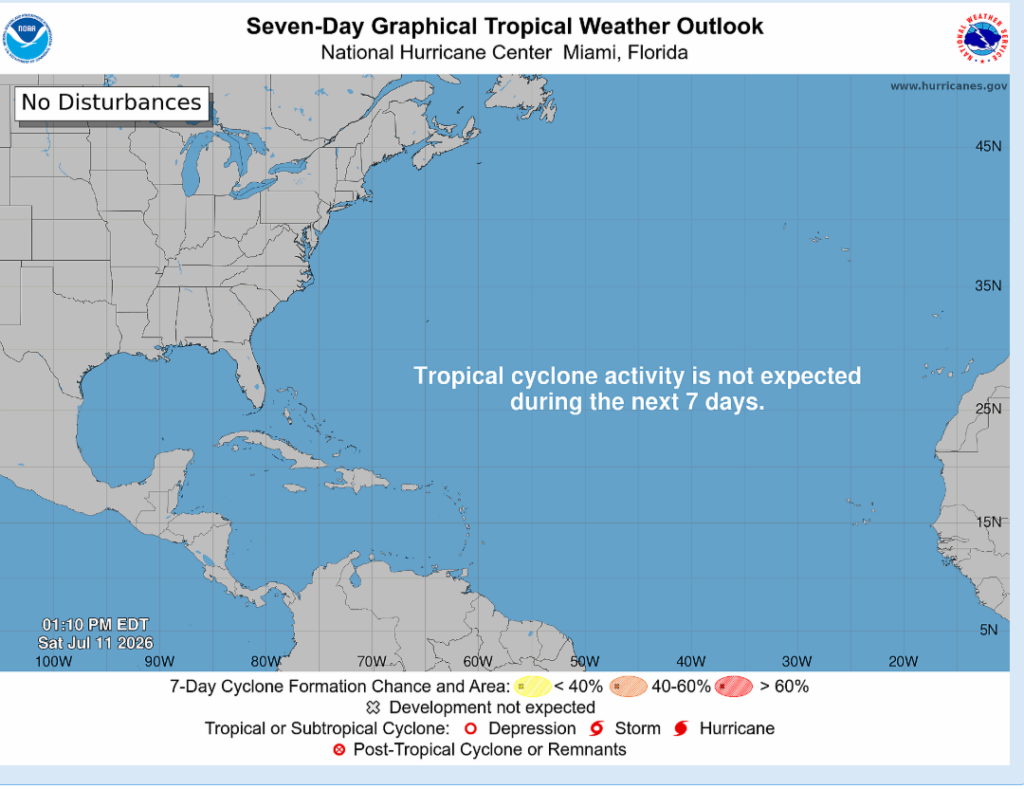
Now, while things are quiet, we can start to look at how this hurricane season compares to past seasons. Below are the average dates for named systems, hurricanes, and major hurricanes in the Atlantic. This year, we started right on cue with our first (and currently only) named storm, Tropical Storm Arthur, which formed on June 17th. This is right around average for the Atlantic Hurricane season, but we may have some future complications with our schedule because of the current El Niño.
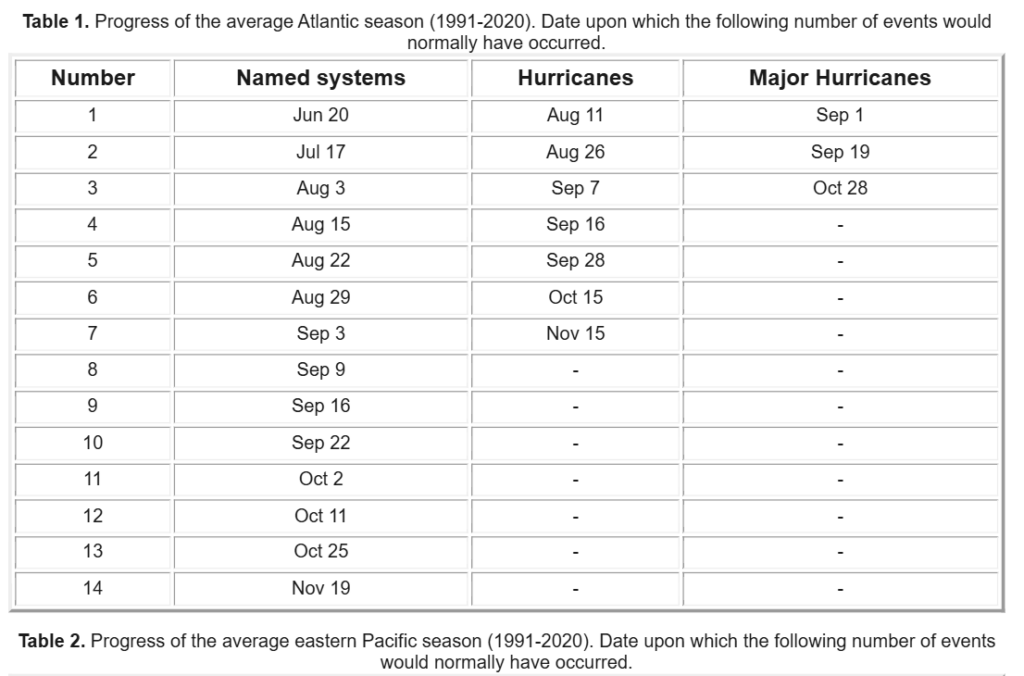
During an El Niño year like 2026, the Atlantic hurricane season is usually less active. This is because El Niño increases vertical wind shear and atmospheric stability over the tropical Atlantic, making it more difficult for tropical disturbances to organize into hurricanes. With a more stable atmosphere over the Atlantic and increased vertical wind shear disrupting thunderstorm development, the Atlantic typically experiences fewer tropical systems during hurricane season.
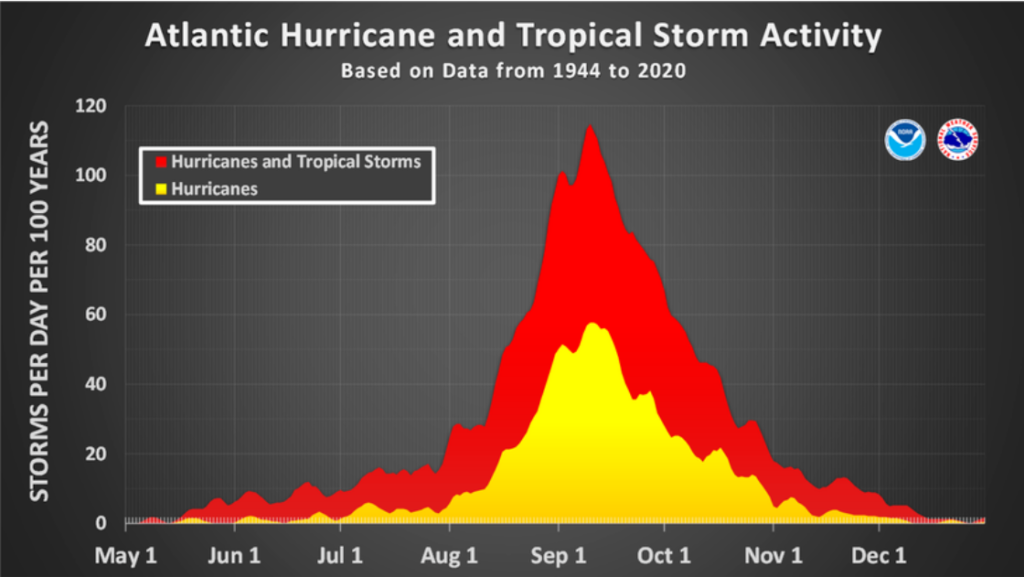
Another neat dataset from the NHC shows the concentration of Atlantic storms by month. Usually, mid-August through mid-October is when most tropical events occur in the Atlantic, but storms can form anytime of the year as long as conditions are right. This chart is interesting because most people expect the summertime to be more active regarding tropical activity, but it is usually late summer into early fall where we see the most disturbances. This serves as something to think about because even though our season is off to a quiet start, we still have the bulk of hurricane season left to come.


