When people try to understand the relationship between the weather and their outdoor gardens, they often talk about the weather conditions during the daytime, such as afternoon highs and cloud cover. In my opinion, one overlooked area is overnight lows, which also play an important role.
During the day, plants use water, sunlight, and carbon dioxide to photosynthesize to produce sugars they use as their primary energy source for maintenance and growth. At night, plants still produce energy using the sunlight they received during the day, but they still need recovery time. Plants require cooler temperatures at night in order to recover adequately.
This is why overnight lows matter, yet it’s something I hardly ever hear people talk about.
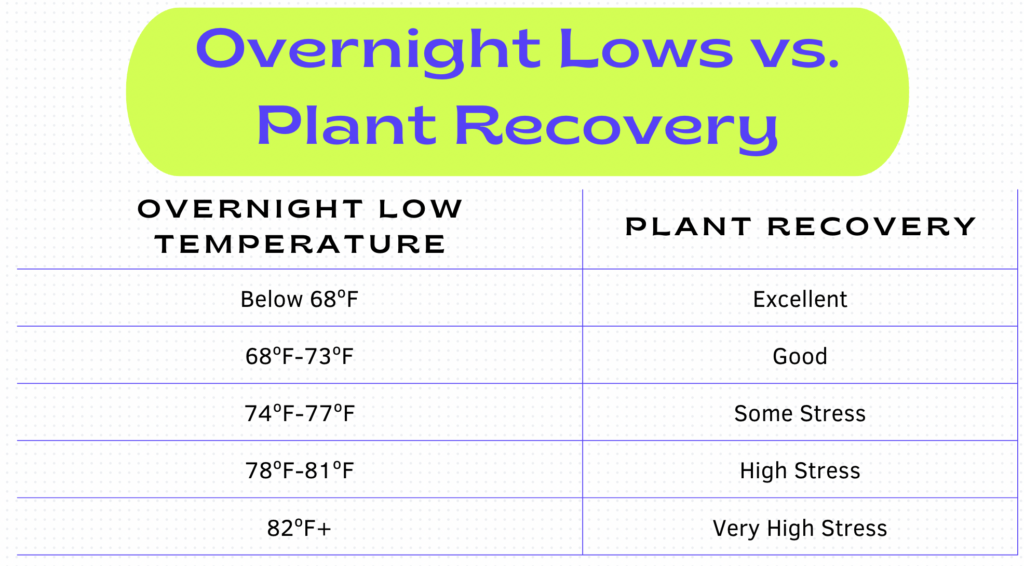
When the overnight lows only drop into the upper 70s or warmer, it causes the plant to continue to use the energy it got during the day from the sun, and therefore more water and plant sugar. Warm nights are particularly damaging when they occur consecutively, giving the plant no chances to recover.
Warm overnight lows combined with high humidity are also harmful because they allow for fungal pathogens to thrive, which can damage or even kill plants.
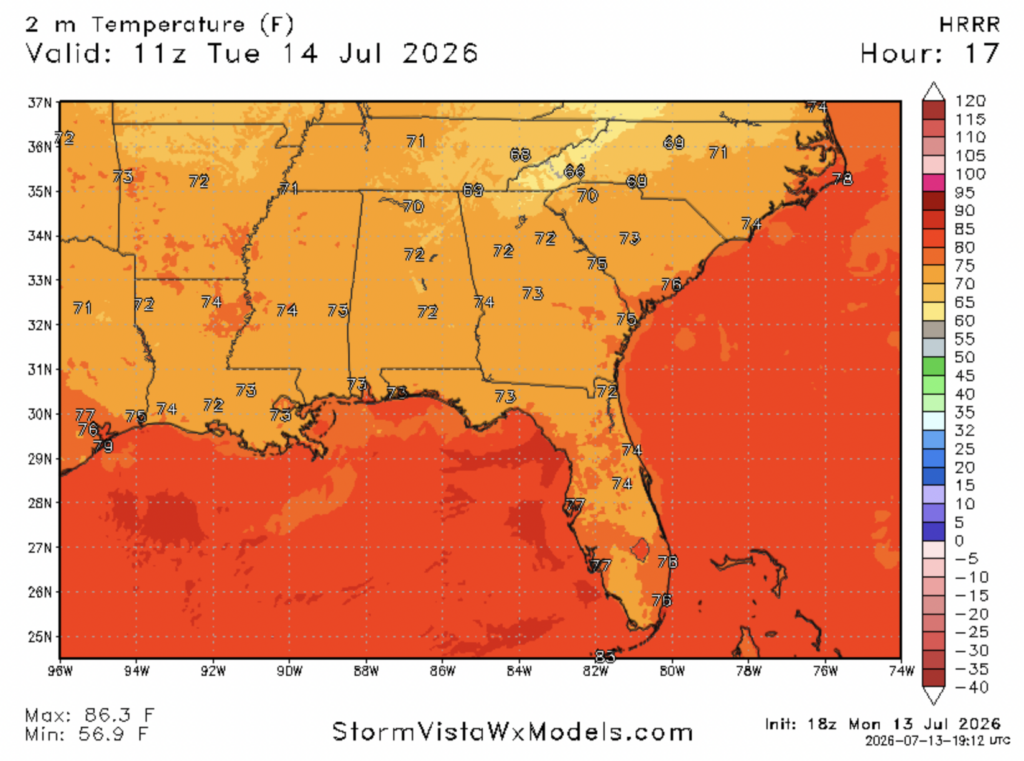
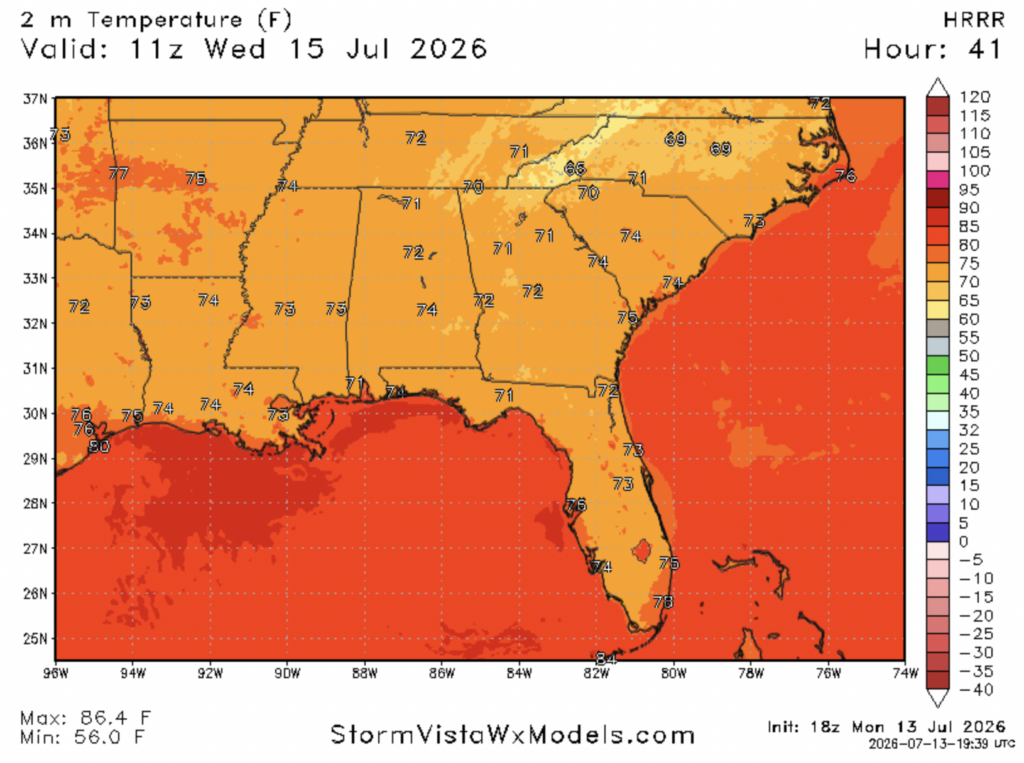
Over the next two days, morning lows are forecasted to drop into the lower to mid 70s, which is about normal for this time of year. That warm gulf water and southerly low level jet will also cause humidity to be very high during these hours, as per usual. While these temperatures aren’t too oppressive, the typical summertime pattern along the gulf coast results in months long stretches when the temperature won’t dip below the low 70s.
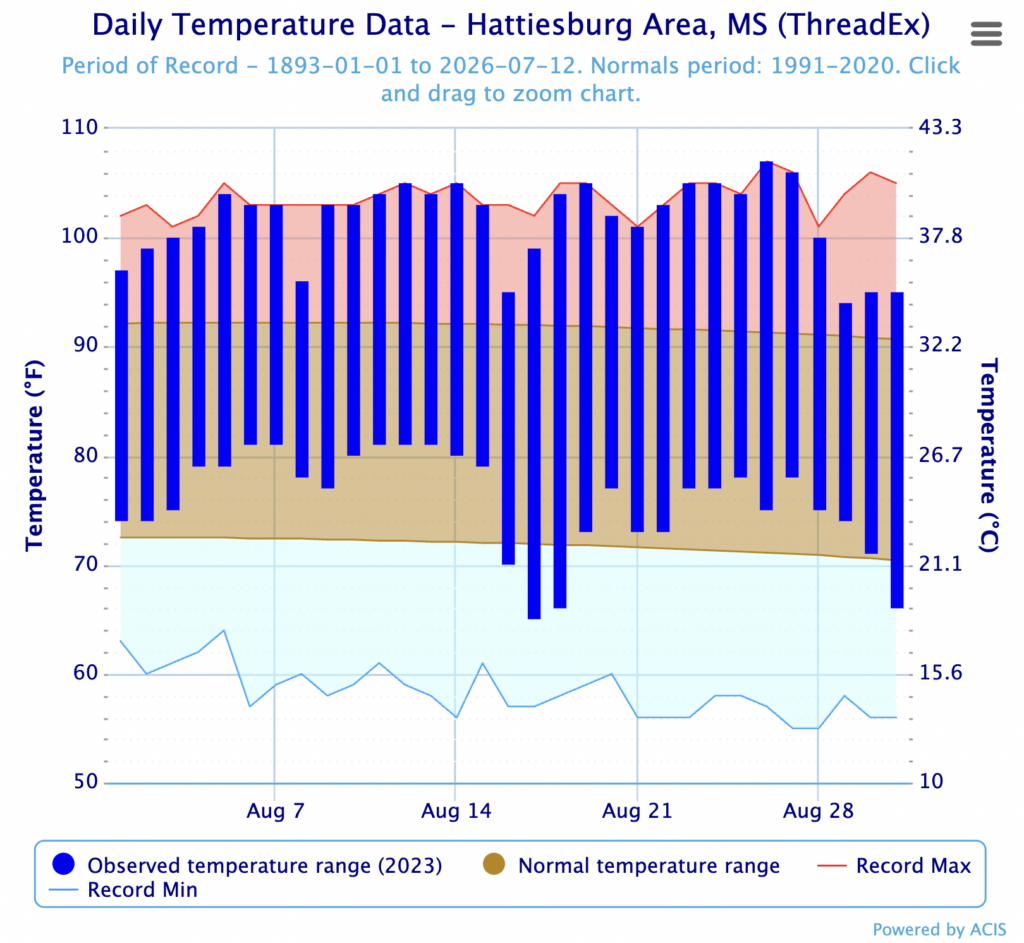
During hot periods, the low temperatures sometimes doesn’t drop below the upper 70s and 80s, which can put severe stress on plants. For example, in Hattiesburg during the record hot August of 2023, there were 12 days where the low didn’t drop below 78ºF, falling into the high stress and very high stress categories.
During these hot periods, it’s especially important to water your plants more than usual, and/or bring them in to an air conditioned area for some time. This is why monitoring overnight lows and paying attention to the weather beyond just in the daytime is important if you have an outdoor garden
See you next week!


